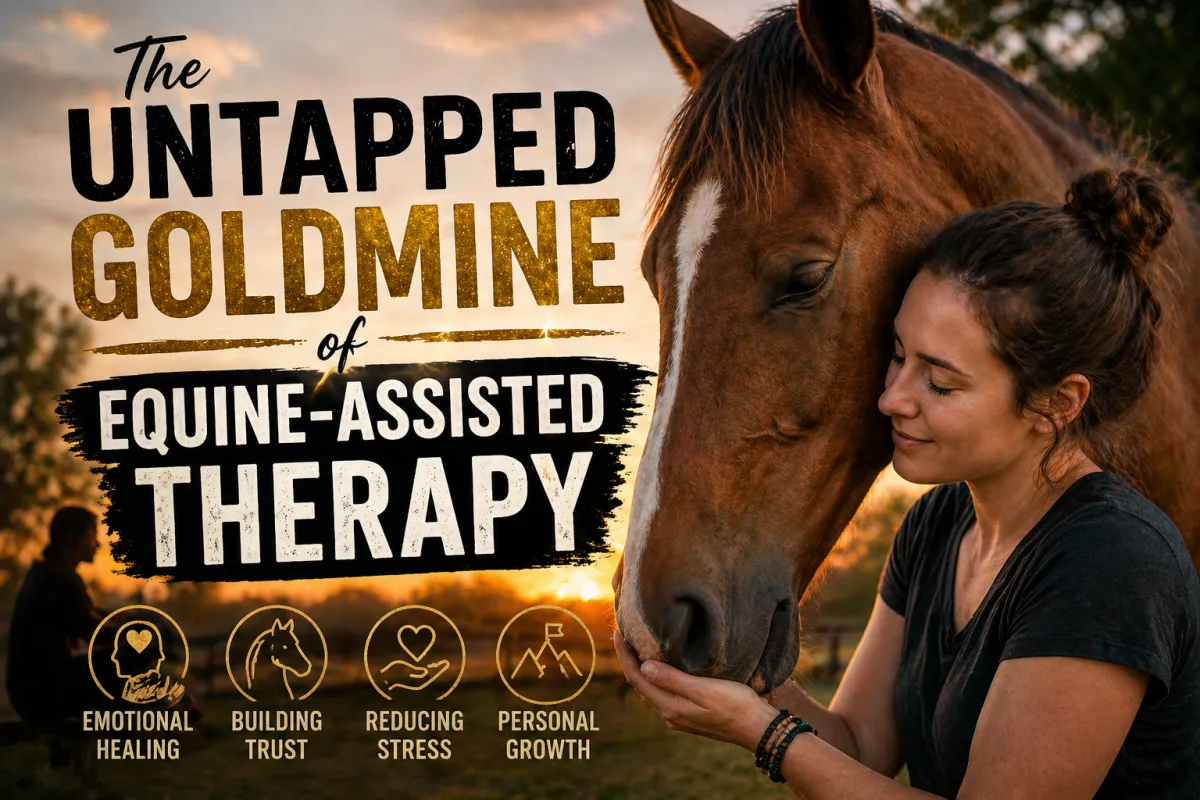
The Untapped Goldmine of Equine- Assisted Therapy
Equine-assisted therapy has been proven to benefit people of all ages and abilities. This type of therapy involves working with horses in a controlled environment supervised by trained professionals. Participants become actively involved with the horses, which can help them work through physical or emotional challenges they may be facing. In this essay, we will explore the many benefits of equine-assisted therapy and why it is a valuable treatment option for people.
One of the most significant benefits of equine-assisted therapy is its ability to improve mental health. The simple act of spending time around horses can be therapeutic in itself. Horses are calm, gentle animals that can create a sense of serenity for people. They are also incredibly intuitive creatures that can pick up on human emotions and react accordingly. This can help participants learn more about themselves and become more self-aware.
Another benefit of equine-assisted therapy is the physical exercise involved. Working with horses requires physical activity, which has been shown to improve overall health and well-being. Participants may have to brush and groom their horses, lead them around, and complete exercises while riding. This equates to cardiovascular exercise, which can improve heart health, increase stamina, and reduce stress levels.
Equine-assisted therapy can also improve self-esteem and confidence. Horses are large, powerful animals that require respect and trust. When participants learn to work with a horse successfully, they gain a sense of accomplishment and pride. This can boost self-esteem and confidence, helping them feel more capable of handling challenging situations in their daily life.
Additionally, equine-assisted therapy is particularly beneficial for individuals with disabilities. Horses have a rhythmic gait that mimics a human's walking movement, making them an ideal animal to learn to ride. Riding a horse can improve balance and coordination, which can be particularly helpful for those with physical impairments. Horses can also provide a sense of companionship and empathy, which can promote socialization and communication skills.
Equine-assisted therapy is versatile and can treat a wide range of issues. It has been used to help people deal with anxiety, depression, PTSD, addiction, and many other mental health issues. It can also aid in physical rehabilitation after an injury or surgery. Overall, Equine-assisted therapy is a valuable treatment option that can benefit people of all ages and abilities.
To conclude, equine-assisted therapy is a unique and effective approach to promoting mental and physical health. Participants can improve their self-esteem, confidence, and physical abilities by working with horses. They can also develop a stronger connection to themselves and others, improving their overall quality of life. Equine-assisted therapy provides a holistic approach to healing that can be used for various conditions and should be considered a valuable treatment option.
If this article is helpful, share it with your friends and colleagues!
Did you find the information listed in this article helpful? Leave a comment below; I’d love to know what you think.
Help is available through professional counseling! Click here to start the counseling process.