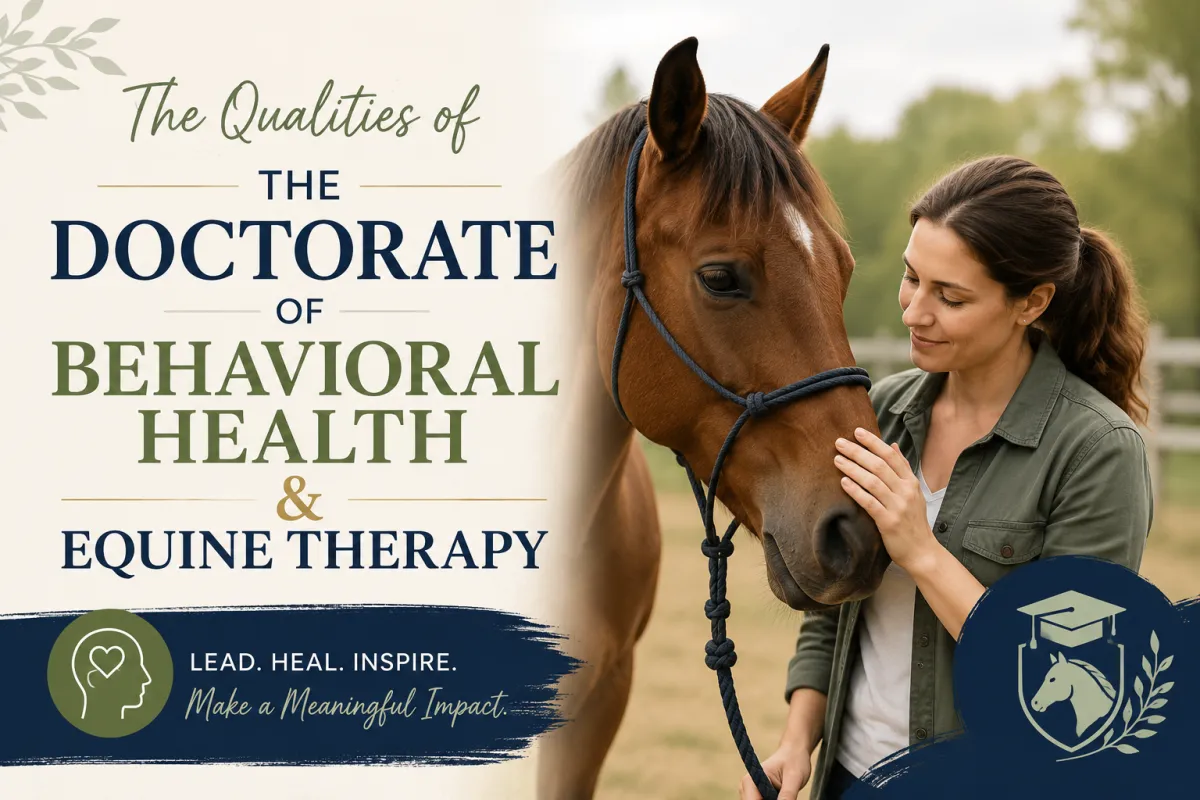
Qualities of the Doctorate of Behavioral Health & Equine Therapy

Qualities of the Doctorate of Behavioral Health & Equine Therapy

April 21, 20262 min read

The Doctorate of Behavioral Health (DBH) qualities are advancing the field of integrative health care. Leadership, innovation, and integrity for treatment of the client population attribute to progress in our health care system. Access to medical, cognitive, and behavioral health care is necessary for headway. Communication across the patient's medical and mental healthcare is the directive approach of the DBH.

Equine Therapy

When we hear the term "Equine Therapy," it's associated with therapeutic value. Likewise, the array of Equine-Assisted Services (EAS) have somatic and psychological benefits. According to PATH International Smith (2021) notes, "Equine-facilitated Psychotherapy (EFP) is defined as an interactive process in which a licensed mental health professional working with or as an appropriately credentialed equine professional partners with suitable equine(s) to address psychotherapy goals set forth by the mental health professional and the client."

Indeed the role of a DBH is innovatively building relationships with Primary Care Physicians (PCP), Nurse Practitioners (ARNP), Physician Assistants (PA), osteopathic (DO) naturopathic physicians (NDs), and health care providers who individually manage the PC of patients. Robinson et al. (2016) mark that integration requires accessibility, reducing the frequency of medication management for mental health in PC, and decreasing frequent follow-ups but encouraging routine health care. Thus, the role of a DBH extends from working directly in the PC office and generating result-based referrals.

The DBH is integrative at the core, joining access to medical and behavioral health care. EAS serves a spectrum of physical, emotional, behavioral, and cognitive difficulties. The benefits of EFP are physical, mental, and behavioral, as the process promotes stability and liberation for the client through the sovereignty of the horse. So how does equine therapy integrate with the qualities of a DBH?

The leadership skills of a DBH coordinate care that renders evidence-based results. The quality of reformation in PC is to offer effective therapy. EFP is an evidence-based modality that serves as an additional routine support treatment for patients. Integrity to acquire knowledgeable, efficient, quality healthcare for the client population is not limited to the office. The DBH is creating new avenues to combine PCP and with the effective treatment of EAS.

Equine Image

References

Robinson, P. J., & Reiter, J. T. (2016). 1-3. In Behavioral consultation and primary care: A guide to integrating services (2nd. ed., pp. 3–55). essay, Springer.

Smith, C. (2021). Path international. Equine-Facilitated Psychotherapy. Retrieved September 27, 2021, from https://www.pathintl.org/60-resources/efpl/201-equine-facilitated-psychotherapy.
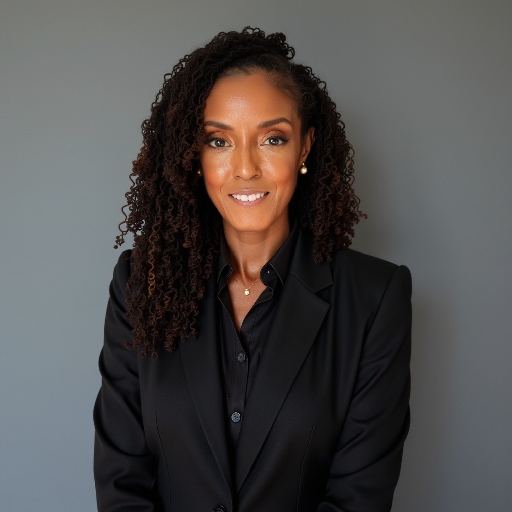
Dr. Rhea Hill’s journey in behavioral health is driven by a deep passion for understanding and addressing the connection between trauma and autoimmune disorders. With a strong foundation in psychology and mental health counseling, she has dedicated over 25 years to healing modalities, transitioning from a licensed massage therapist to mental health counseling and ultimately to integrated behavioral health.
After earning her Doctor of Behavioral Health from Cummings Graduate Institute for Behavioral Health Studies in 2024, Dr. Hill has focused on understanding the connection between trauma and autoimmune diseases and the impact of equine-assisted therapy on treatment outcomes. Inspired by her own health journey following a systemic sclerosis/scleroderma diagnosis in 2010, she is now pioneering programs that integrate eco-therapy with healthcare providers. With a vision to establish an equine-assisted treatment center specializing in women’s health and holistic care, Dr. Hill is paving the way for transformative advancements in behavioral health. 
In this interview, Dr. Hill discusses how the DBH program shaped her career path, broadened her expertise in integrated behavioral healthcare, and enhanced her perspective on effective leadership to drive meaningful advancements in behavioral health outcomes.
To learn more about how the DBH program has shaped Dr. Hill's career post-graduation, visit DBH ALUMNI SPOTLIGHT: DR. RHEA HILL, DBH, LPC.

Dr. Rhea Hill

Dr. Rhea Hill’s journey in behavioral health is driven by a deep passion for understanding and addressing the connection between trauma and autoimmune disorders. With a strong foundation in psychology and mental health counseling, she has dedicated over 25 years to healing modalities, transitioning from a licensed massage therapist to mental health counseling and ultimately to integrated behavioral health. After earning her Doctor of Behavioral Health from Cummings Graduate Institute for Behavioral Health Studies in 2024, Dr. Hill has focused on understanding the connection between trauma and autoimmune diseases and the impact of equine-assisted therapy on treatment outcomes. Inspired by her own health journey following a systemic sclerosis/scleroderma diagnosis in 2010, she is now pioneering programs that integrate eco-therapy with healthcare providers. With a vision to establish an equine-assisted treatment center specializing in women’s health and holistic care, Dr. Hill is paving the way for transformative advancements in behavioral health. In this interview, Dr. Hill discusses how the DBH program shaped her career path, broadened her expertise in integrated behavioral healthcare, and enhanced her perspective on effective leadership to drive meaningful advancements in behavioral health outcomes. To learn more about how the DBH program has shaped Dr. Hill's career post-graduation, visit DBH ALUMNI SPOTLIGHT: DR. RHEA HILL, DBH, LPC.

Instagram logo icon
Back to Blog